
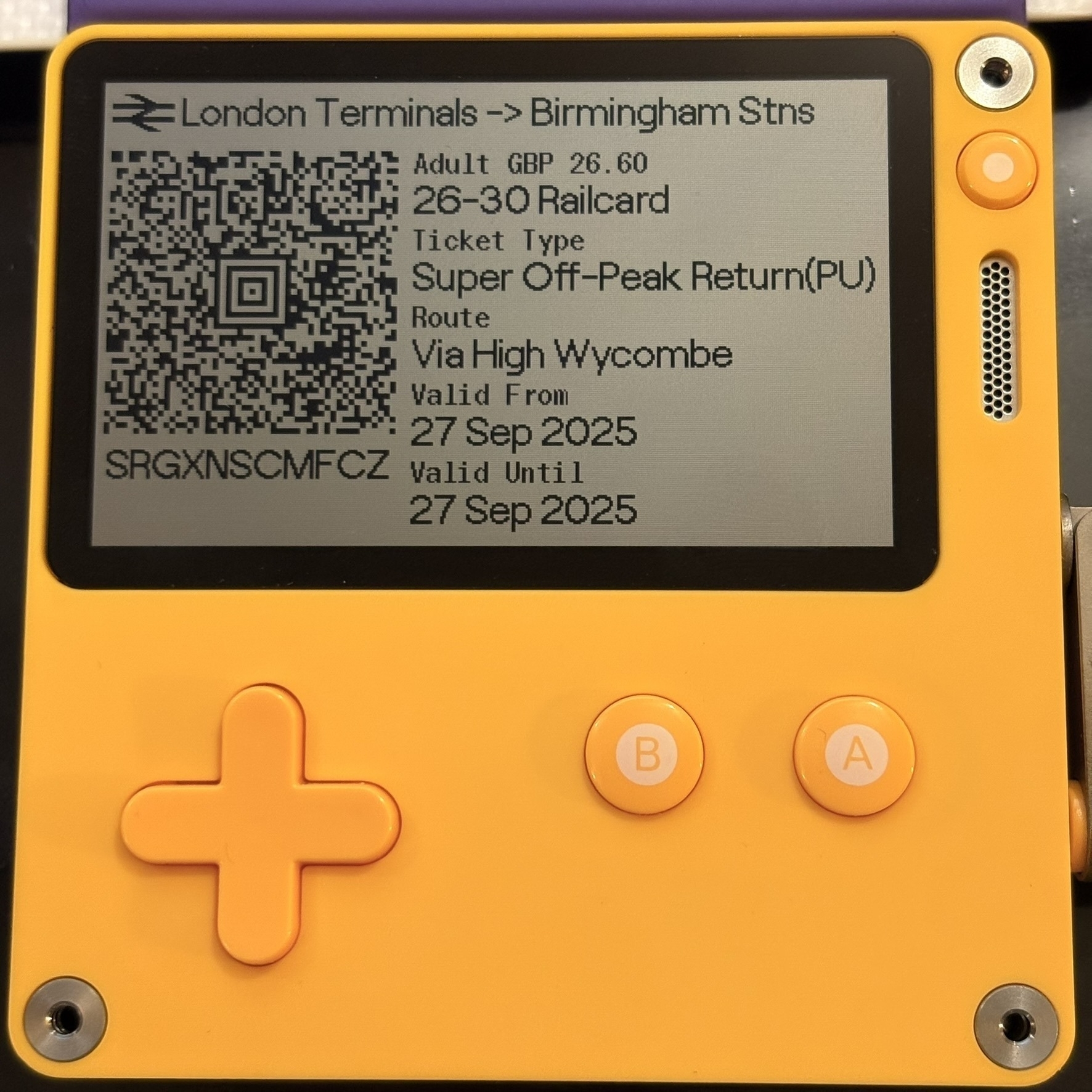
dream: Load UK rail ticket onto Panic Playdate so I don’t have to fiddle with my phone at the station
reality: the ticket gates can’t read Playdate’s screen very well, likely due to contrast / backlight reasons
next steps: something something e-ink display
Want to visualise the temperature changes in my flat that’s too hot ↓ Buys temperature logger ↓ Curious on room temperature’s correlation with outside temperature ↓ Use openweathermap to get weather data ↓ ???? ↓ Using AWS dynamoDB to store raw jsons triggered by a Lambda func cronjob
IKEA Student Bundles and Their Multi Item Barcodes
IKEA’s “Student Boxes” in the UK feature a data matrix barcode that encodes multiple item codes, facilitating returns and regional bundle creation, but it could technically be misused to fraudulently add items to a cart.
should have realized earlier: best way to shoot a Tesla coil is to use a long shutter
London Museum of Water & Steam: Gaussfest, 2025-09-07

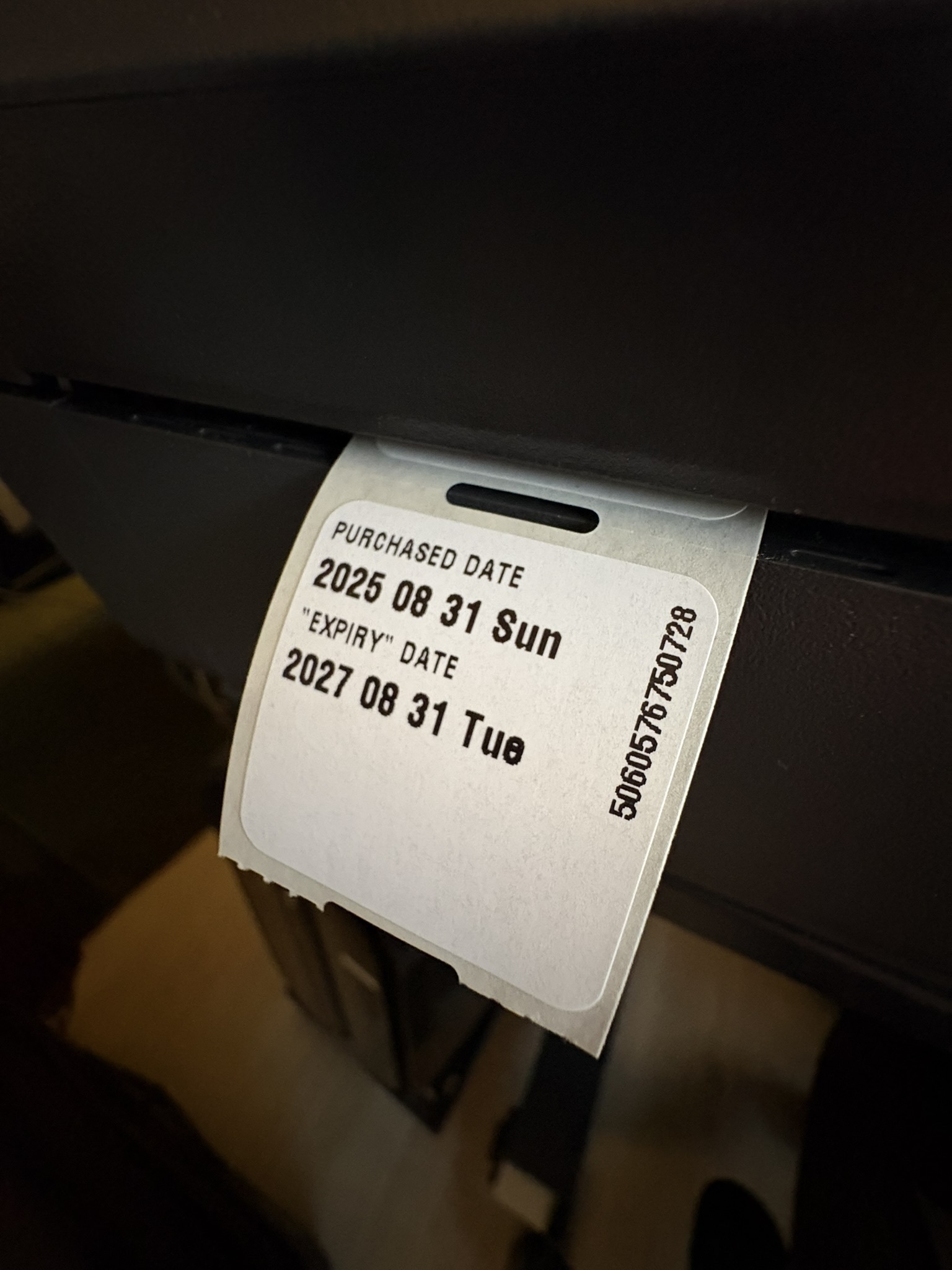
Problem: I want to know when groceries expire (or “expire”), alongside when I have purchased the item.
Solution: Learn enough C# to operate a commercial label printer
(WIP) The Hitchhikking Guide to the London Underground
Currently working on a fully offline TfL guide. Requirements:
- Fully offline. The final product is a PDF I can load on my e-reader. The London underground is a challenging environment for internet connectivity, and I have seen way too many instances of apps tripping themselves due to poor mobile service.
- Shows where the way outs / transfer exits are (i.e. where to get on the train so I will be close to the exit)
- Shows first / last trains for any given station
This is still a very work-in-progress project, but currently:
- London Underground, DLR, Overground, and Elizabeth Line are covered
- “Covered” as in, each station has its own page, showing previous & next stations, and lines available at the same station.
- The stop locations are still being implemented. This is largely a manual process on the data ingestion side because I will not miss an excuse to take more trains.
Using Python (Interacting with TfL API + most of the data wrangling) + SQLite (stop location) + Typst (rendering to a PDF). Previously also using memcached to cache TfL API results but dropped it in favour of just writing responses to disk (it’s fine – we are not doing cloud microservices here).


